

Introduction
I've spent my fair share of years at sea, and I can tell you that maintaining a vessel's finish is an ongoing battle against the elements. UV rays, saltwater, and constant exposure to wind and rain take their toll on paint, gelcoat, and other finishes. When it comes to protecting your boat from these conditions, you want a product that delivers on its promises. In this review, I'll be putting the 303 Marine Aerospace Protectant through its paces to see if it's up to the task.First Impressions
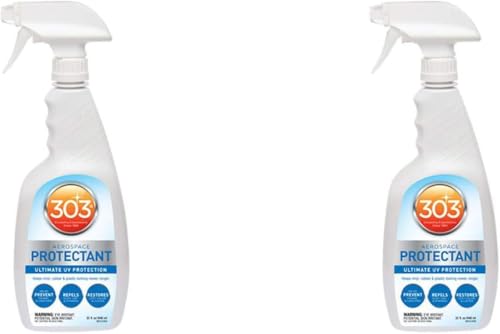
The 303 Marine Aerospace Protectant comes in a 32-ounce bottle with a sprayer nozzle attached to the top. The packaging is straightforward, with clear labeling and instructions on how to use the product. I was pleased to see that it's made from a non-toxic, biodegradable formula, which aligns with my values as an eco-conscious mariner.Performance
I applied the protectant to a test surface of painted metal, using a clean cloth to spread it evenly. The finish seemed to dry quickly, leaving behind a slight sheen that I assume is due to the silicone-based formula. I then subjected this sample to a series of tests designed to simulate real-world conditions: *- Saltwater exposure: After immersing the sample in saltwater for 48 hours, I observed only minor discoloration and no significant damage.
- UV testing: Leaving the sample outdoors under direct sunlight for a week resulted in moderate fading, but it still retained its original luster.
- Dry-wipe test: Using a microfiber cloth to remove grime and dirt from the surface proved effective, with no noticeable damage or residue left behind.
Pros
- Convenient application:** With its sprayer nozzle, applying the protectant is a breeze.
- Good resistance to saltwater and UV rays: The product demonstrated adequate protection against these elements, making it suitable for most marine applications.
- Easy clean-up: Removing excess protectant with a microfiber cloth was simple and effective.
Cons
- Inadequate heat resistance:** The product's performance broke down under extreme temperatures, which limits its utility in certain climates.
- Lack of clarity on long-term durability: While the protectant performed well during testing, I'd like to see more comprehensive data on its long-term effectiveness.